
Published 22 October 2026 · Evidence checked through 22 October · An open investigation, not a finding of guilt
Mohamed Abdukardir Ali’s route into Sweden’s parliament deserves international attention for a reason more serious than the online spectacle around his name: a candidate who began ninth on the Left Party’s list in Dalarna won the seat through 648 personal votes, while prosecutors are now investigating suspected improper influence on voting in Borlänge. Those two facts can stand together without turning suspicion into a verdict. SVT’s election report ↗ Prosecutor’s latest update ↗
Who is Ali, and how did he get here?
Ali, a politician from Borlänge, entered the 2026 parliamentary contest as a Left Party candidate. Personal votes moved him ahead of candidates higher on the list. That is a lawful feature of Sweden’s electoral system, not evidence of wrongdoing by itself. His result became a national story when allegations emerged about the conduct of people around the campaign. Ali has denied involvement in election fraud. The party announced a timeout from parliamentary work while the investigation continues. Ali’s denial and the party response, reported by SVT ↗
From little-known candidate to parliament in under a year
Swedish Radio reported after the election that Ali had belonged to the Left Party for less than a year and had held no previous political office. He stood ninth on its Dalarna parliamentary list, yet 648 personal votes moved him into its seat. The surprise was visible inside the party: local group leader Matts Hammarqvist first told Expressen he did not really know who Ali was. Hammarqvist later clarified to TV4 that he knew of Ali but did not know him personally or work with him. The Dalarna district chair separately told SVT that Ali was not unknown in the party. It would be wrong to turn the first remark into a claim that nobody in the party knew him. The real question is what vetting the party performed before putting a newcomer on its list and how it responded once personal votes made him its national representative. Swedish Radio on his short party tenure ↗ TV4 on the first reaction ↗ TV4 on Hammarqvist’s clarification ↗
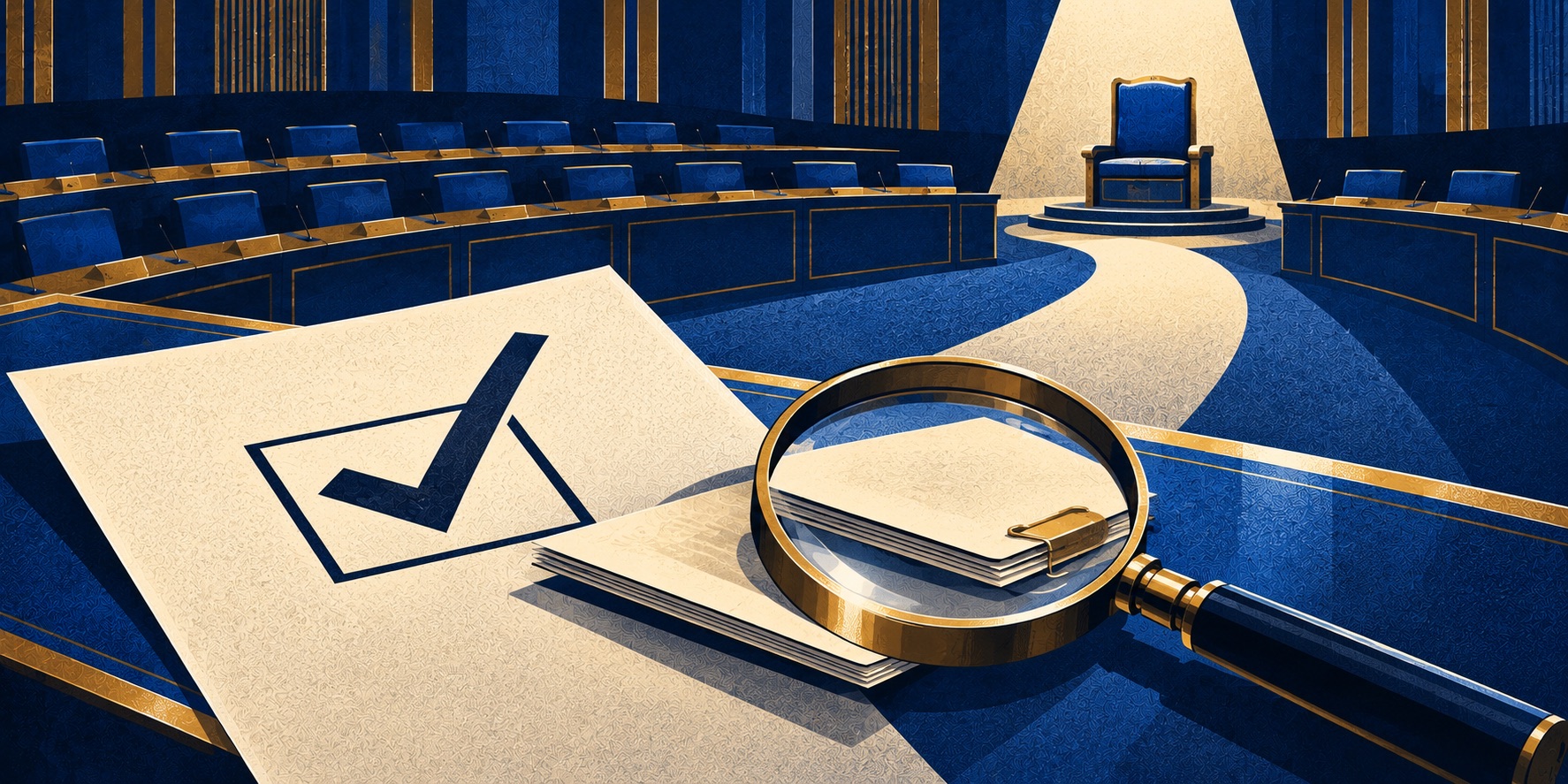
The documented sequence at a glance
- 2022Debt relief approved with a zero-payment assessment.
- Feb 2026Citizenship granted after an earlier refusal.
- Sep 2026648 personal votes carry Ali into parliament.
- Oct 2026Debt-plan review and election inquiry remain live.
The record in sequence
2022–24: The Enforcement Authority approved debt relief in 2022 for 40 debt entries totalling SEK 163,045, with no payments required under the initial assessment of his means. In January 2023, Ali answered “no” to a question on his citizenship application about debts forwarded to the Enforcement Authority, according to documents examined by Kvartal. His application was refused because the debt record meant he did not then meet the legal requirement of an “honourable way of life” (hederligt levnadssätt); the published reasons concern unpaid obligations, not a general finding that he committed a crime. Later submissions by his lawyer described the debt relief as completed, although the process was still running. He received citizenship in February 2026 after a later application. Kvartal’s document review ↗ Further review of the decisions ↗
September–October 2026: Ali won a parliamentary seat through 648 personal votes. Prosecutors opened an inquiry into suspected improper influence on voting in Borlänge. After the election, two further payment claims, for SEK 14,495 and SEK 9,798, reached the Enforcement Authority. The party announced a political timeout. Ali sought leave, then reported sick; as of 20 October Swedish Radio said the Left Party could not say when he would begin parliamentary work. None of these developments proves he committed election fraud or that his illness is false. Prosecutor update ↗ New claims ↗ Swedish Radio on his absence ↗
What the school record does, and does not, tell us
Press accounts of Ali’s school certificate report an E in social studies at compulsory-school level and an A in Somali as a mother-tongue subject, with only three grades on the final introductory-programme certificate. In Sweden, E is a passing grade. An introductory programme is designed for students who are not yet eligible for a national upper-secondary programme; its certificate is not the same thing as a full national-programme diploma. The reported certificate ↗ Swedish school authority on introductory programmes ↗
Why study Somali after moving to Sweden as a teenager? Swedish education rules allow eligible students to study their mother tongue alongside other subjects. The subject develops literacy and knowledge of the language; it does not replace Swedish or social studies. A strong result in Somali is not evidence of hostility to Sweden. A school certificate from years ago is a poor substitute for assessing a legislator’s present knowledge, policy positions and work. The fair political question is what Ali has done to prepare for office, and how the Left Party assessed that preparation. Mother-tongue education rules ↗
Identity records: what the 2013 decision actually says
Kvartal reports, citing Migration Agency records, that Ali received permanent residence as a family member in September 2013 even though the agency did not regard his identity as formally established at the time. That is a specific evidentiary finding in an immigration decision. It does not mean he had no name, no legal status, or spent ten years “without an identity.” The reporting available to us does not establish exactly when or how the agency later assessed his identity for citizenship. The fair public question is which evidence the agency relied on at each stage, which rule or exception applied in 2013, and what changed by the time citizenship was granted in 2026. Kvartal’s review of the residence record ↗ Migration Agency’s identity guidance ↗
Citizenship: wrong answers, then an unexplained change of outcome
The citizenship documents deserve their own accounting. In the earlier refusal, the requirement of hederligt levnadssätt was applied to his unpaid debts and his handling of them. The phrase is a statutory citizenship test; it should not be turned into an unsupported claim about every aspect of his character. GP’s sourced editorial review ↗ Kvartal reports that Ali electronically signed a 2023 application saying he had no debts with the Enforcement Authority, months after debt relief was approved. The Migration Agency identified the debt situation and refused that application. His lawyer later argued to a court that the debt relief had been completed; records described by Kvartal and 100% show that it continued. A later application led to citizenship in February 2026. The available reporting does not establish that the incorrect 2023 answer caused the 2026 grant, nor does it establish what the agency knew or why it changed its assessment. That is exactly why the agency, Ali and his lawyer should explain the relevant documents and decision grounds. Calling the granted citizenship “fraudulently obtained” would assert a conclusion the record we reviewed does not support. Kvartal ↗ 100% ↗
Questions from his public financial record
Separate from the election inquiry, Swedish media have reported a debt-restructuring plan and two later payment claims sent to the Enforcement Authority. One claim concerns unpaid motor-insurance charges of SEK 14,495; another, SEK 9,798, concerns Stockholm city’s removal of a car registered to Ali after it had stood improperly parked in Rinkeby. These are reported payment claims, not a criminal finding, and they do not show that the city paid his personal debt. Ali has said he intends to settle what he owes. The public-interest question for the Left Party is what financial checks it made for a parliamentary candidate and how it handles unresolved obligations consistently across candidates. Reported claims and Ali’s response ↗
TV4 also reported that Ali was registered at a flat shared with two men who were convicted of serious crimes, during two periods between 2016 and 2020. Its report says Ali himself had no conviction beyond a speeding fine and that earlier investigations concerning him were dropped. A shared address does not establish participation in another person’s crimes. It does, however, raise a legitimate, narrower question about what background information the party sought and how it evaluated it before placing candidates on the ballot. TV4’s documented address report ↗
Forty debt entries and claims that kept coming
TV4 reports that the 2022 debt-relief decision covered roughly 40 creditors and SEK 163,045. Separate claims arrived after the election, including the vehicle-related amounts above. Those later claims are demands, not proof that the original debt total simply rose by their sum; their legal status and overlap must be checked. Expressen reported that officials sought to serve Ali with the new claims after he had not acknowledged notices. Ali has said he intends to pay, and TV4 reported that he said he sought review of the plan himself after his circumstances improved. The test is now documentary: which claims have been paid, what has the Enforcement Authority decided, and when will he publish a clear account? A seat in parliament can change his income; it cannot answer those questions for him. TV4 on the debt plan and his response ↗ Claims and service, via Omni/Expressen ↗
The broader history is more substantial than two recent bills. Expressen’s review, summarised by Göteborgs-Posten and Bulletin, describes unpaid child-maintenance support that the Social Insurance Agency referred for collection, a missed second CSN instalment plan, driving-test fees, a private loan, transport penalties and vehicle charges. It reports at least three vehicles registered to Ali during debt relief; one car accumulated more than SEK 5,000 in parking fines before Stockholm city removed it in 2025. It also reports eleven payment orders outside the original debt-relief case between April 2024 and June 2026, ten of which proceeded to collection. Some of those later amounts were paid, so “every debt remained unpaid” would be inaccurate. The documented pattern still demands a direct account of which obligations he accepted, which he disputed, and what he paid. Expressen’s investigation ↗ GP’s dated summary ↗ Bulletin’s summary ↗
Two later claims, one simple calculation
The student-aid debt, and the test of financial responsibility
The most pointed documented criticism is about follow-through. Based on school and CSN records described in Expressen’s reporting, the student-aid agency sought repayment for Ali’s final school term in 2016. He contacted CSN in 2017 and obtained an instalment arrangement, but the reporting says only the first payment was made. CSN later appeared among the creditors in his debt-restructuring case. This is a reported payment history, not proof of why the payments stopped. Ali should explain the timeline, the amount still at issue and what he has done to resolve it. Report citing the CSN records ↗ TV4 on the creditor list ↗
The Enforcement Authority approved a zero-payment debt plan in 2022 because it assessed that he then lacked ability to pay. A parliamentary salary changes the public question, but it does not automatically change an existing legal plan. On 1 October, TV4 reported that a creditor had asked for the plan to be reviewed and that Ali said he had also requested a review himself because his finances had improved. He wrote that he intended to pay according to his current capacity. That statement deserves to be recorded; it also creates a clear standard against which the outcome can be checked. Ali’s response and the review process ↗
Why did a young debtor receive a zero-payment plan?
Ali was in his mid-twenties when the Enforcement Authority approved debt relief in 2022 on SEK 163,045 owed to about 40 creditors. TV4 reports that the authority assigned him a zero-payment plan because it assessed that he had no income or assets from which to pay. Swedish rules tie payments to ability to pay; a zero plan is therefore a lawful possible outcome, even for a young applicant. But the decision deserves inspection: what evidence of his income, assets, vehicles and future earning prospects was before the authority? What changed after the ruling, when did it change, and did he promptly report a material improvement? We have not obtained the complete case file and cannot assert that the original decision was improper or that anyone gave him preferential treatment. The subsequent parliamentary salary and review requests make the answer to those questions especially important for creditors and voters. TV4 on the decision and review ↗ Enforcement Authority rules ↗
Repeated unpaid obligations to public agencies and private creditors warrant direct questions of a member of parliament. Voters should be able to see whether promises to repay become documented payments. The Left Party should say how it assesses a candidate’s financial record, without pretending that debt alone bars someone from elected office.
Contact-ban applications and old suspicions
Verifiera examined prosecutor decisions concerning applications for a contact ban against Ali in 2019 and 2023. The documents referred to then-open investigations, including 2023 suspicions of assault, unlawful coercion and an offence involving a child witnessing alleged violence. The applications for contact bans were refused; the published documents do not show a charge or conviction arising from those suspicions. That record supports a question about what the Left Party checked when it selected its candidate. It does not support saying that Ali was subject to a contact ban, breached one, or committed those alleged acts. Verifiera’s review of prosecutor decisions ↗
What investigators have actually said
The Swedish Prosecution Authority says its National Anti-Corruption Unit is investigating suspected improper influence on voting in Borlänge linked to the Left Party. On 20 October, police carried out searches and seized material for analysis. Prosecutors did not disclose what the seized items were. In a September update, they said no one had been detained or formally notified of suspicion at that point. The 20 October statement does not announce a charge against Ali. September prosecutor statement ↗ 20 October prosecutor statement ↗
Borlänge municipality reviewed reports from its polling places and said it found no sign of systematic fraud inside them. Its review did not cover every alleged action outside polling places, which is why the police investigation still matters. Equally, a search or a rumour cannot prove that a particular candidate knew about or directed improper conduct. The municipality’s limited review, via SVT ↗
A seat won, but where is the parliamentary work?
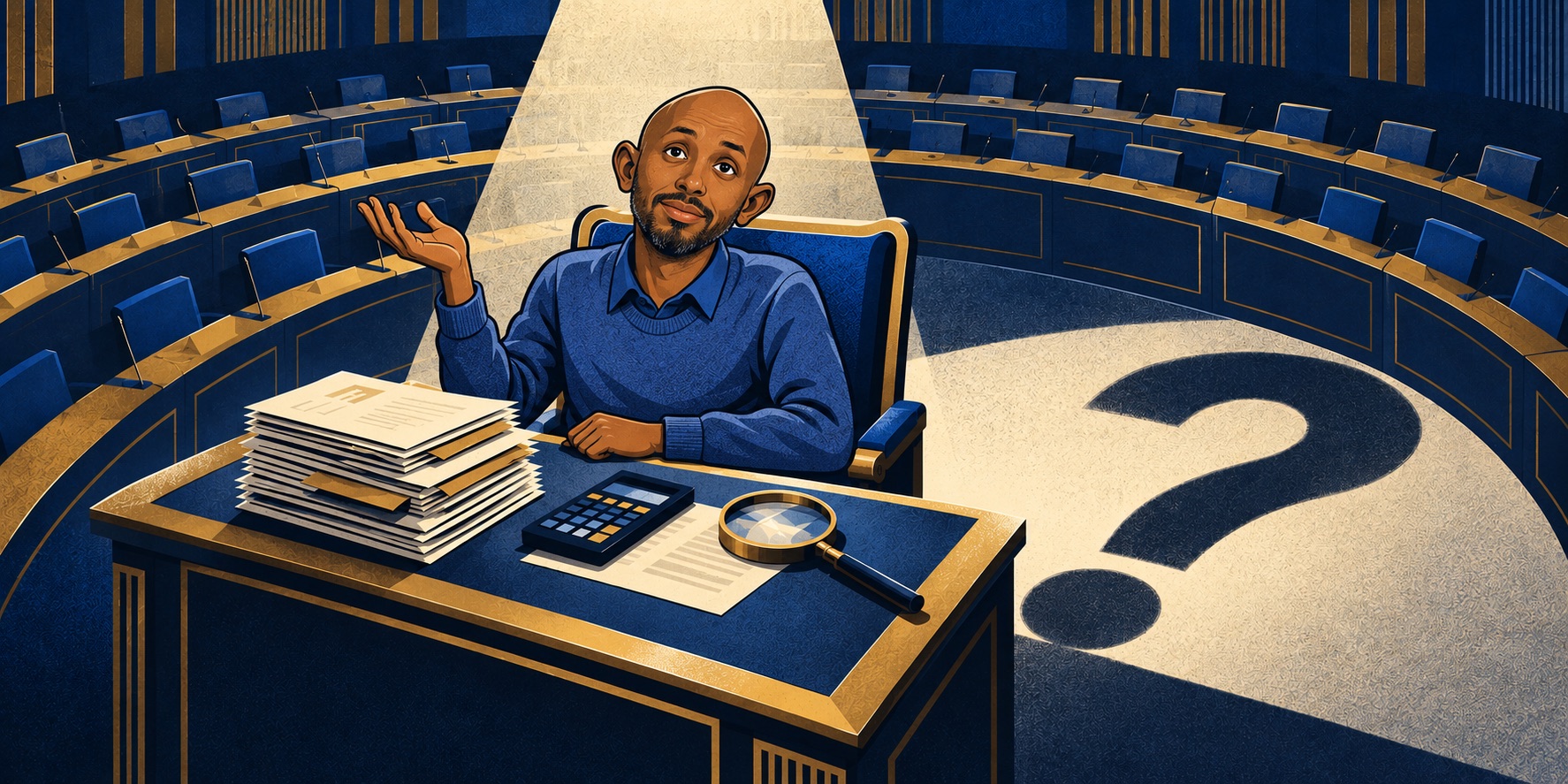
Swedish Radio reported on 20 October that Ali had been absent since parliament opened in September, that the Speaker had refused his leave request and that he had subsequently reported sick. The Left Party did not give a return date. A medical absence cannot fairly be recast as proof that someone refuses to work. But voters are entitled to know how their seat is represented, whether a substitute can serve, what salary and leave rules apply, and when the party expects a member to take up duties. Ali and his party should answer those institutional questions directly. Swedish Radio, 20 October ↗
The business relationship that deserves answers
Agneta Nyvall, formerly a local Moderate politician and now associated with NyFramtid, has described herself as Ali’s friend and business partner. In September she defended his character in an SVT interview and described a plan to sell digital services in Somalia. By 20 October she told Expressen she wanted to wind down their shared company and questioned whether business meetings she believed in had taken place. That is her account; it has not been independently established by the prosecutor’s election inquiry. The shift from confident defender to disillusioned partner is a fair subject for scrutiny, including what either of them knew, what was promised, and whether any public role was used to advance a private venture. Nyvall’s September interview ↗ Her October account to Expressen ↗
Nyvall is entitled to change her assessment as she learns more. But a political veteran entering a cross-party business arrangement should also explain the due diligence she performed. The Left Party should explain its candidate checks, what it knew before the election, and the criteria it will use before restoring Ali to parliamentary duties. Those questions belong in public, with documents and dates, rather than insinuation.

Somalia ventures: proposals, payments and proof
Nyvall and Ali discussed ventures involving digital services in Somalia; Nyvall later said she wanted to dissolve their shared company and questioned whether the business meetings she had been led to expect happened. Reporting has also linked one of Ali’s companies to plans adjacent to Sweden’s disputed aid arrangement with Somalia. A link in reporting is not evidence that he won a government contract, received aid money or influenced the bilateral agreement. The questions for Ali and Nyvall are concrete: what entities were registered, who owned them, which meetings occurred, who paid for travel, what contracts exist, and did any public money enter the venture? A business plan is not a contract, and a boarding pass is not a balance sheet. SVT on the original plan ↗ Expressen on Nyvall’s later account ↗ Aftonbladet on the reported aid-arrangement link ↗
These reported ventures justify questions about Ali’s interests beyond Sweden: the ownership and activity of Afritech Growth AB, any Somalia-based counterparties, contracts or revenue, and whether business interests were disclosed where parliamentary duties required it. The company discussed in the reporting is Swedish. We have found no reliable account of his total income, assets or completed Somalia deals, so it would be unsupported to say that his main economic interest lies outside Sweden. He and Nyvall can resolve much of this by releasing company records, meeting dates and funding details. Aftonbladet’s account of the company and plans ↗
Hold Ali and his party to account
Ali and the Left Party must answer for the campaign that won him a parliamentary seat. If anyone used coercion, inducements or deception to influence votes, that would violate voters’ freedom and demand consequences. Those questions require evidence about individual acts and decisions. The prosecution service explains that improper influence can include threats or bribes; it has not said those acts are proven in this case. What the offence means ↗
Ali sought a national mandate and must answer for the confidence placed in him. His public record can also affect how voters hear his claims to represent a wider community. That makes candour more urgent for him and for anyone who publicly defends him: they should address the debts, application answers, business plans and campaign questions on their merits. A defence that waves away documented questions would deepen distrust rather than resolve it. This is a political judgment about Ali and those who endorse him; it is not evidence against other Somali Swedes or people with immigrant backgrounds seeking office. The Left Party should explain why it still considers him fit to represent its voters while these questions remain open.
Claims on Facebook that Ali confessed or was dramatically arrested have already been shown to be fabricated, with fabricated imagery. Repeating them would make real accountability harder. No reliable source we found establishes the sexuality of named voters or a political bargain over LGBTQ policy. The only responsible test is what Ali has actually said and voted for, and whether it aligns with the commitments of the party that put him on its ballot. Read the Facebook fact-check ↗
The ballot gave Ali a seat. It did not give him a hall pass on ordinary questions.
See the people and the source reporting
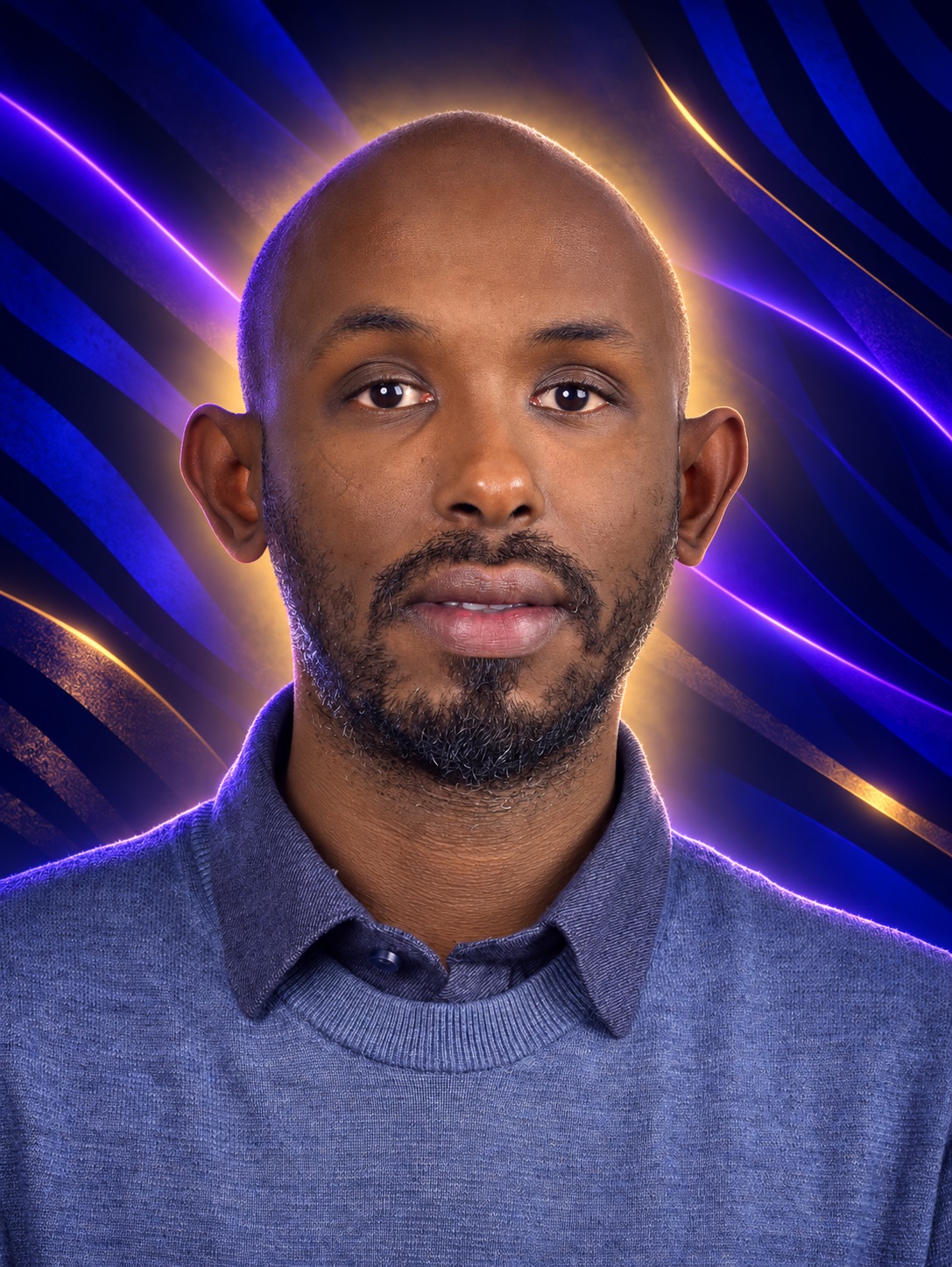
Ali’s official Riksdag profile and portrait ↗ identify the member whose public record is examined here. For Nyvall, SVT’s photographed video interview ↗ records her earlier defence of Ali, while Expressen’s later interview ↗ records her changed account. The newsrooms’ photographs remain on their own pages; their captions and context matter.
These reports pose a hard test for both politicians. Ali owes the public a dated account of his debts, his campaign and his business representations. Nyvall owes an account of the checks she made before endorsing him and joining his venture. The Left Party owes voters an explanation of the scrutiny it applied. None of those answers should depend on the outcome of a social-media rumour.
Representation in parliament brings a duty to answer for conduct, finances and potential conflicts of interest. Voters can reasonably ask whether Ali should retain their confidence if he cannot give a documented account of those matters. The Left Party should explain its vetting and its standard for his continued service. His record of debts, disputed application answers, business claims and parliamentary absence deserves direct scrutiny. The party’s decisions deserve the same.
Questions the public should keep asking
What exactly do the prosecutors conclude about the campaign, and when will they disclose it? What did Ali know about the actions under investigation? What contracts, expenses and meetings can Ali and Nyvall document for their company? What checks did the Left Party perform before and after the election? And what safeguards will keep voters free from pressure in the next contest? Those questions are sharper than a personal insult. If evidence ultimately clears the people involved, it should be reported just as plainly as any finding against them.
Editorial note: This is a dated, evidence-based commentary, not an allegation that Ali or Nyvall committed a crime. The prosecution remains active as of 22 October 2026. Biographical and party details come from SVT; official investigation facts from the Swedish Prosecution Authority; Nyvall’s changing statements are attributed to her published interviews. We will correct or update this article when official findings change.